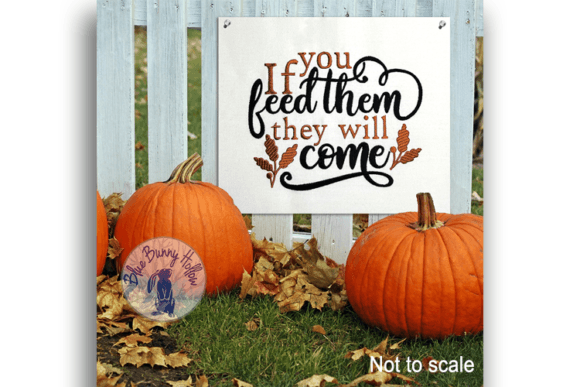
Reviewing If You Feed Them They Will Come
As a designer who spends more time staring at stitch simulations than actual fabric, I have learned to be skeptical of seasonal graphics. Too often, holiday motifs rely on clichés that look charming on a screen but turn into a tangled mess under the needle. However, when I pulled up If You Feed Them They Will Come for a recent client project, my initial reaction was one of genuine appreciation for its wit and structural simplicity. This design does not just scream "holiday"; it whispers a warm, humorous invitation that fits perfectly into the modern crafter’s toolkit.
First Impressions: Mood and Visual Personality
The phrase itself is a playful twist on a classic idiom, immediately setting a tone that is welcoming rather than demanding. Visually, the layout balances typography with thematic elements in a way that feels organic. For an embroidery designer, the first thing we look for is flow. Does the eye travel naturally across the design? In this case, the arrangement guides the viewer through the message without clutter. The mood is cozy, slightly rustic, and undeniably grateful, capturing the essence of the season’s warmth without resorting to overly complex imagery that might overwhelm smaller garments.
What stands out most is the versatility of the visual personality. It is not strictly traditional, nor is it aggressively modern. It sits comfortably in that sweet spot where handmade charm meets professional polish. This makes it an ideal candidate for a wide range of embroidery projects, from high-end boutique items to casual home goods.
Real-World Application: The Tote Bag Test
To truly evaluate a machine embroidery design, you have to imagine it stitched out. I recently considered this design for a custom order of canvas tote bags intended as hostess gifts. The scenario was specific: the client wanted something that felt personal but not overly intimate, suitable for carrying a bottle of wine or a casserole dish to a Thanksgiving gathering.
If You Feed Them They Will Come proved to be an excellent choice for this application. On a sturdy cotton canvas, the design’s lines held their integrity. The text remained legible, and the accompanying graphic elements provided enough visual weight to anchor the composition without making the bag feel heavy or stiff. When I visualized the finished product, I could see how the humor of the phrase would spark conversation. It transforms a simple handmade product into a memorable personalized gift. For an Etsy seller or small shop owner, this kind of conversational piece drives engagement because it gives the buyer a story to tell.
Performance Across Different Garments and Goods
Beyond tote bags, this design shows remarkable adaptability. For sweatshirt embroidery, the design scales well. Placed on the left chest, it acts as a subtle nod to the season. Enlarged for the back of a hoodie, it becomes a statement piece. The key here is understanding how the stitch density interacts with the fabric. Sweatshirts are thick and textured, so a design with clear, open spaces works better than one with dense, solid fills that might pucker the material.
For baby embroidery projects, such as bibs or onesies, caution is required. While the sentiment is sweet, the size of the lettering must be checked against the hoop size. If the text becomes too small, the finer details may get lost in the nap of the fabric or become scratchy against sensitive skin. In these cases, simplifying the thread colors and ensuring a soft backing is crucial.
When considering custom apparel like aprons or kitchen towels, the design shines. These items are often viewed up close, allowing the stitch quality to be appreciated. The theme aligns perfectly with the function of the item, creating a cohesive finished product that feels intentional and well-designed.
Technical Considerations and Potential Pitfalls
No design is without its challenges, and honest review requires addressing where If You Feed Them They Will Come might struggle. One area of concern is curved surfaces, such as caps or hats. The horizontal spread of the text requires a stable, flat area to sit correctly. On a structured cap, this might work, but on a unstructured dad hat, the fabric distortion could warp the lettering. Always test on scrap fabric first to ensure the hoop size and stabilization are adequate for the curve.
Another critical factor is fabric texture and color. On dark fabrics, the contrast of the thread colors becomes paramount. If the design relies on subtle shading, it may disappear against black or navy material. I recommend running a simulation in black and white to check for contrast issues before committing to the final stitch. Additionally, for stretchy fabrics, the use of a cut-away stabilizer is non-negotiable to prevent the design from distorting after washing.
Detailed corners and tiny lettering can also pose risks if the embroidery file is not optimized. Check the stitch types used. A mix of satin stitch for borders and fill stitch for larger areas is standard, but ensure that any running stitch details are secure and not prone to snagging. If the design includes very fine lines, consider whether they will hold up on textured fabrics like linen or terry cloth.
Enhancing Brand Value and Customer Trust
For creative entrepreneurs and craft business owners, the choice of design directly impacts brand perception. Using a well-balanced, thoughtful design like If You Feed Them They Will Come signals professionalism. It shows that you care about the aesthetic and functional quality of your small shop product. Customers are increasingly discerning; they can tell when a design is slapped on versus when it is curated. This level of care builds trust and encourages repeat business.
Moreover, the versatility of this design allows for consistent branding across different product lines. You can use it on embroidered patches, pillow covers, and holiday embroidery specials, creating a cohesive collection. This consistency helps in building a recognizable brand identity, which is invaluable for long-term growth.
Practical Designer Notes for Best Results
Before you load this digital embroidery file into your machine, take a moment to review the technical specs. Since exact stitch counts and file formats are not provided here, you must verify these details with the source. Ensure the format matches your machine’s requirements. Check the recommended hoop size to avoid unnecessary re-hooping or trimming.
- Test on Scrap: Always stitch a sample on the same fabric type you intend to use for the final product.
- Check Contrast: Verify that your chosen thread colors stand out against the fabric background.
- Review Density: Ensure the stitch density is appropriate for the fabric weight to prevent puckering.
- Inspect Details: Zoom in on the design to check for tiny elements that might not stitch out cleanly.
- Licensing: Confirm the license terms. Are you allowed to sell finished items? Can you use it for commercial projects? Always respect intellectual property rights.
In conclusion, If You Feed Them They Will Come is a strong contender for your autumn and winter catalog. It offers a blend of humor, warmth, and design integrity that appeals to both makers and buyers. With careful attention to technical details and fabric selection, it can elevate your commercial embroidery offerings and bring a touch of genuine joy to your design assets. Whether you are creating a single personalized gift or a full line of boutique branding items, this design deserves a spot in your rotation.