Review: Wifey in the Hoop Snap Tab Design
As an embroidery designer who has spent years digitizing and testing files for commercial use, I approach every new machine embroidery design with a critical eye. It is not just about whether the design looks pretty on a screen; it is about how it performs under the needle, how it holds up after washing, and most importantly, how it serves the brand identity of the small business using it. Today, I am reviewing the Wifey in the Hoop Snap Tab Design, a product that sits at the intersection of personal gifting and boutique merchandise potential.
This embroidery file is marketed primarily as an In-The-Hoop (ITH) keychain, intended for creating beautiful gifts for loved ones or personal accessories. However, for the savvy shop owner, the utility of this design extends far beyond a simple key fob. When evaluating digital assets for small business merch, we must look past the primary marketing angle and see the structural possibilities. Does this design work as a branded patch? Can it elevate a tote bag? Let us dive into the professional assessment.
First Impressions and Visual Personality
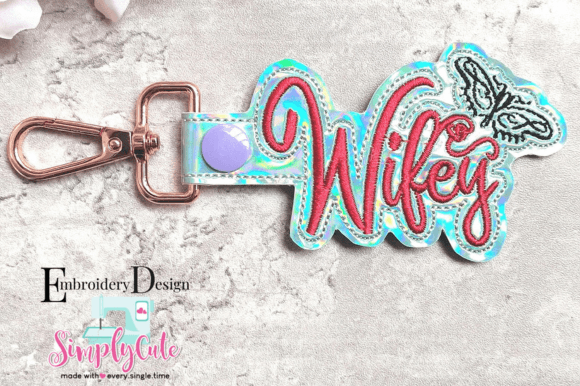
The immediate visual impact of the Wifey in the Hoop Snap Tab Design is one of playful elegance. The typography suggests a modern, handwritten aesthetic that feels both friendly and premium. For businesses in the wedding industry, bridal boutiques, or lifestyle brands, this visual personality is crucial. It does not scream "corporate"; instead, it whispers "handmade" and "curated."
In the context of Sewing and textile arts, the snap tab mechanism adds a layer of functional sophistication. It transforms a flat piece of fabric into a three-dimensional object. This tactile element is something customers love to touch and interact with, which can significantly increase perceived value. The design feels decorative yet structured, making it suitable for items that need to look polished rather than purely rustic.
Real-World Business Applications
While the product description highlights its use as a keychain, I encourage apparel decorators and Etsy sellers to think broader. Here is how this design can be integrated into a diverse product line:
- Branded Patches: By removing the keychain hardware aspect during production, the embroidered front can serve as a standalone embroidered patch. These can be ironed or sewn onto denim jackets, canvas totes, or even laptop bags as a subtle brand accent.
- Boutique Merchandise: Imagine a bridal shop offering these as part of a "Bridesmaid Proposal" box. The finished product becomes a keepsake that reinforces the emotional connection to the brand.
- Apron Embroidery: For bakeries or florists, a simplified version of this aesthetic could work on staff uniforms. While the full ITH structure might be too bulky for an apron chest pocket, the design elements can inspire custom apron embroidery that matches the shop’s vibe.
- Tote Bag Design: The snap tab concept can be adapted. Instead of a keychain, the embroidered panel can be sewn onto the exterior of a canvas tote as a textured label, adding depth to a otherwise flat tote bag design.
For commercial embroidery projects, versatility is key. This design offers a way to create high-margin, low-material-cost items that feel substantial. It is an excellent candidate for impulse buys at checkout counters in creative studios or local boutiques.
Technical Considerations for Production
Before running a large batch, there are technical factors every designer must consider. The success of any digital embroidery file depends heavily on the interaction between thread, fabric, and stabilizer.
Stitch Density and Fabric Texture: Because this is an ITH design, it likely involves multiple layers of fabric folded over. You must check the stitch density to ensure it does not become too stiff or bulky. If you are using thick fabrics like denim or canvas for a more rugged look, ensure your machine can handle the thickness. Conversely, on delicate fabrics, high density might cause puckering. Always test on the actual fabric texture you intend to sell.
Thread Colors and Contrast: The legibility of the word "Wifey" relies on strong contrast. When producing for custom apparel or accessories, avoid low-contrast combinations unless you are aiming for a subtle, tonal look. Test your thread colors against both light and dark backgrounds. A white thread on a cream fabric might disappear, ruining the professional look of the item.
Hoop Size and Stabilizer: Confirm the required hoop size before setting up your production line. Using the wrong hoop can lead to misalignment, especially with the snap tab feature which requires precise folding. Use a cut-away stabilizer for items that will undergo frequent washing, such as keychains that might get tossed in a bag with keys and coins. This ensures the design remains crisp and does not distort over time.
Brand Identity and Customer Trust
Why does the choice of design matter for brand identity? Consistency builds trust. If your brand is known for high-quality, thoughtful details, a poorly executed embroidery job can damage that reputation. The Wifey in the Hoop Snap Tab Design, when executed well, signals attention to detail.
For handmade brands, the "handmade" feel is a selling point, but it must not look amateurish. Clean edges, proper tension, and neat backing are non-negotiable. Using this design as part of your design assets library allows you to create a cohesive look across different products. Whether it is a keychain, a patch, or a tag on a larger item, the visual consistency helps customers recognize your brand instantly.
Furthermore, offering personalized or themed items like this increases buyer engagement. Customers are more likely to share photos of unique, cute accessories on social media, providing free marketing for your shop. A well-made handmade product becomes a conversation starter.
Where to Use Caution
Not every application is suitable. Be careful when attempting to scale this design down for tiny patches or cap embroidery. Small lettering can become illegible if the stitch count is too high for the size. Additionally, curved surfaces like the front of a baseball cap may distort the text if the stabilizer is not robust enough.
Avoid using this specific ITH structure on items that require flat packing for shipping, as the bulk may increase shipping costs. Also, if you are targeting a corporate client looking for subtle uniform branding, this playful design might be too casual. Always align the design choice with the client’s target audience.
Practical Designer Notes for Implementation
To ensure success with the Wifey in the Hoop Snap Tab Design, follow these steps before full production:
- Test in Black and White: Stitch out a monochrome version first to check for clarity and spacing issues without the distraction of color.
- Check Small Patch Viability: If you plan to use it as a small label, stitch a miniature version to ensure the text remains readable.
- Inspect Spacing: Look closely at the kerning of the letters. Ensure there are no loose threads or jumps that could unravel.
- Create a Printable Mockup: Before selling, create a printable mockup or digital render to show clients exactly what the final product will look like. This manages expectations and reduces returns.
- Confirm Licensing: Always verify the commercial license terms of the embroidery file. Ensure you are allowed to sell physical items made with this design, especially if you are producing in high volumes.
In conclusion, the Wifey in the Hoop Snap Tab Design is a versatile asset for the modern embroidery entrepreneur. It bridges the gap between personal sentiment and professional merchandise. By understanding its technical requirements and leveraging its visual appeal, you can create standout products that enhance your brand identity and delight your customers. Whether for Embroidery enthusiasts or serious retail brands, this design offers a charming pathway to higher-value offerings.