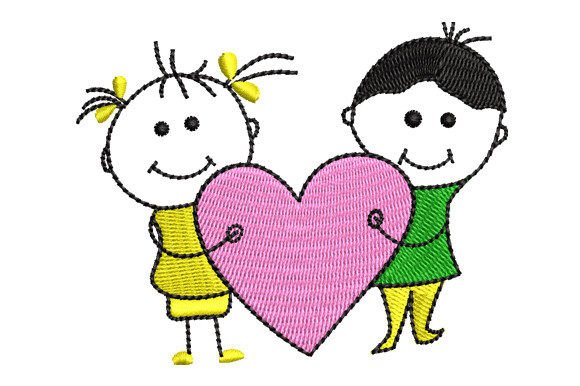
Loving Couple Cartoon with Hearth: A Designer’s Review
As an embroidery designer who has spent countless hours digitizing and stitching thousands of designs, I approach every new machine embroidery design with a critical eye. It is not just about whether the image looks cute on a screen; it is about how those digital lines translate into thread on fabric. Recently, I evaluated the Loving Couple Cartoon with Hearth to determine its viability for real-world projects. This review is written for fellow designers, Etsy sellers, and craft entrepreneurs who need to know if this asset will hold up in a commercial or personal setting.
First Impressions and Visual Personality
The first thing that strikes you about the Loving Couple Cartoon with Hearth is its warmth. In the world of Valentine S Day themes, it is easy to fall into the trap of overly generic hearts and arrows. However, this design offers a narrative element—the hearth—that grounds the romance in a sense of home and comfort. The layout feels balanced, with the couple positioned centrally, creating a natural focal point. From a design perspective, the silhouette is clean, which is crucial for maintaining stitch clarity. When I visualize this as a finished product, I see a piece that appeals to customers looking for cozy, sentimental decor rather than just flashy holiday graphics.
The mood created here is intimate and safe. For a small business owner, this emotional connection is what drives sales. Customers do not just buy an embroidered item; they buy the feeling it evokes. This design succeeds in creating a soft, inviting aesthetic that works well beyond just February 14th. It fits seamlessly into winter-themed collections, anniversary gifts, or housewarming presents.
Real-World Application and Fabric Performance
To truly test the Loving Couple Cartoon with Hearth, I considered how it would perform on various substrates. Let us imagine a practical scenario: you are preparing a custom order for a client who wants a personalized gift for their parents’ anniversary. You decide to use this design on a high-quality cotton tote bag. Here, the stitch density becomes a primary concern. If the design relies heavily on dense fill stitch areas without proper underlay, it could cause puckering on a lightweight tote. However, if the digitizing utilizes a mix of satin stitch for outlines and moderate fill for the characters, it should lay flat and look professional.
For custom apparel, such as a sweatshirt or hoodie, this design shines. The thicker fabric of a sweatshirt can support a slightly higher stitch count, allowing the details of the hearth and the couple’s expressions to stand out. Sweatshirt embroidery benefits from bold, clear shapes, and this cartoon style aligns perfectly with that requirement. Conversely, if you were attempting baby embroidery on a delicate onesie, you would need to be cautious. The texture of the fabric and the sensitivity of baby skin require lighter thread weights and potentially fewer stitches to avoid stiffness. In such cases, testing on scrap fabric is non-negotiable.
I also considered this as an embroidered patch. Patches are trending in the craft business world, and this design’s contained shape makes it an excellent candidate. By using a tight satin border, you can create a durable patch that can be ironed or sewn onto jackets, caps, or bags. This versatility increases the value of the digital embroidery file, allowing you to market it to a wider audience of makers.
Technical Considerations for Stitching Success
While the aesthetic is charming, technical execution determines the quality of the finished product. One area where designers must pay attention is the detail level around the hearth. Small, intricate elements can sometimes get lost if the thread colors do not provide enough contrast. I recommend reviewing the design in black and white before stitching. If the details disappear in monochrome, they will likely blend together in color too, especially from a distance. Adjusting your thread palette to ensure high contrast between the couple, the hearth, and the background is essential for visual appeal.
Another critical factor is the choice of stabilizer. For stretchy fabrics like jersey knits used in t-shirts, a cut-away stabilizer is mandatory to prevent distortion. For woven fabrics like linen tea towels or pillow covers, a tear-away might suffice, but only if the stitch density is low. Always check the recommended hoop size for this design. If the design is large, ensure your machine can accommodate the necessary hoop without re-hooping, which can lead to alignment issues. Curved surfaces, such as caps, present another challenge. The rigid nature of a cap buckram requires precise positioning. If the Loving Couple Cartoon with Hearth has a wide base, it may not fit well on a standard cap front panel without scaling down, which could compromise detail clarity.
Dark fabrics pose their own set of challenges. If you are stitching this on a navy or black garment, you may need to use a white or light-colored underlay to make the colors pop. Without this step, dark threads can sink into the fabric, making the design look muddy. This is particularly important for holiday embroidery where vibrant presentation is key to customer satisfaction.
Commercial Viability and Brand Consistency
For Etsy sellers and small shop owners, the Loving Couple Cartoon with Hearth offers strong commercial potential. It is not just a seasonal item; it is a lifestyle design. This means you can incorporate it into a broader range of products, from kitchen towels to nursery decor. When creating printable mockups for your online store, ensure that the images reflect the true texture of the embroidery. Buyers appreciate transparency, and showing close-ups of the stitch work builds trust.
Brand consistency is another angle to consider. If your brand focuses on rustic, handmade aesthetics, this design fits perfectly. It complements natural fibers and earthy tones. However, if your brand is modern and minimalist, you might need to adjust the color palette to muted pastels or monochromatic schemes to maintain cohesion. The flexibility of the design allows for this adaptation, making it a valuable asset in your library of design assets.
It is also vital to address licensing. Before selling any handmade product featuring this design, confirm the license terms provided with the embroidery file. Most commercial licenses allow for the sale of physical items but prohibit the resale or sharing of the digital file itself. Respecting these terms protects your business and supports the digitizer community.
Final Verdict and Practical Tips
In conclusion, the Loving Couple Cartoon with Hearth is a solid addition to any designer’s toolkit, particularly for those focusing on romantic, cozy, or family-oriented themes. Its strength lies in its emotional resonance and versatile application across various textiles. To get the best results, always start with a test stitch on similar fabric to gauge tension and density. Pay attention to thread tension, especially when switching between satin and fill stitches. Use high-quality threads to enhance the sheen and durability of the final piece.
- Test the design on scrap fabric to check for puckering or thread breaks.
- Ensure high contrast between thread colors and fabric background.
- Use appropriate stabilizers for different fabric types, such as cut-away for knits.
- Verify hoop size compatibility with your embroidery machine.
- Review licensing terms before selling finished items commercially.
- Consider scaling the design appropriately for smaller items like patches or baby clothes.
By approaching this embroidery project with careful planning and technical precision, you can create stunning, high-value products that resonate with customers. Whether you are creating a personalized gift for a loved one or stocking your small shop with unique merchandise, this design offers the charm and quality needed to succeed in the competitive world of handmade goods.